Team Baseball Uniforms: A Buyer's Guide to Custom Jerseys and Uniform Bags
A procurement-focused guide to ordering team baseball uniforms, covering custom jersey specifications, coordinated uniform bags, OEM options, sampling, and supplier evaluation.
What buyers need to decide before sourcing team baseball uniforms
Ordering team baseball uniforms is a specification and verification exercise, not a catalog pick. You are buying a coordinated set: jerseys that carry your team identity, size runs that fit children through adults, and often uniform bags that keep the set together. Each element introduces variables—colors, trim placement, decoration method, size distribution, and packing—that must be locked down before bulk production.
This guide is for coaches, club managers, school athletic directors, and distributors moving from consideration to supplier evaluation. It focuses on the decisions you control: how to define requirements, what to ask suppliers, how to read a sample, and where custom jersey orders typically go wrong.
Define the uniform program before you request quotes
A clear program brief reduces back-and-forth and makes supplier responses comparable. Start with these five inputs:
- Roster and size distribution. Collect sizes for every player, including youth and adult ranges if your program spans both. A supplier that can plan children and adult sizes within the same order simplifies logistics.
- Identity assets. Provide vector artwork for wordmarks, crests, and numbering. Specify exact placement—chest, sleeve, back—and whether numbers are front-only, back-only, or both.
- Color standards. Use Pantone or physical swatches rather than screen colors. Confirm how trim, piping, and sleeve bands should contrast with the body.
- Decoration method. Decide whether you want embroidery, screen print, heat transfer, or tackle twill. Each has different durability, hand-feel, and minimum-order implications. Ask the supplier to confirm the method during sampling.
- Ancillary items. If you need custom uniform bags, decide whether they should match jersey colors, carry team branding, or simply organize the kit. Bag specifications are a separate conversation from jersey specs.
Write these into a one-page brief. Suppliers who ask clarifying questions about artwork placement and size runs are often more reliable than those who quote immediately.
Custom baseball jersey styles: match the design to the order
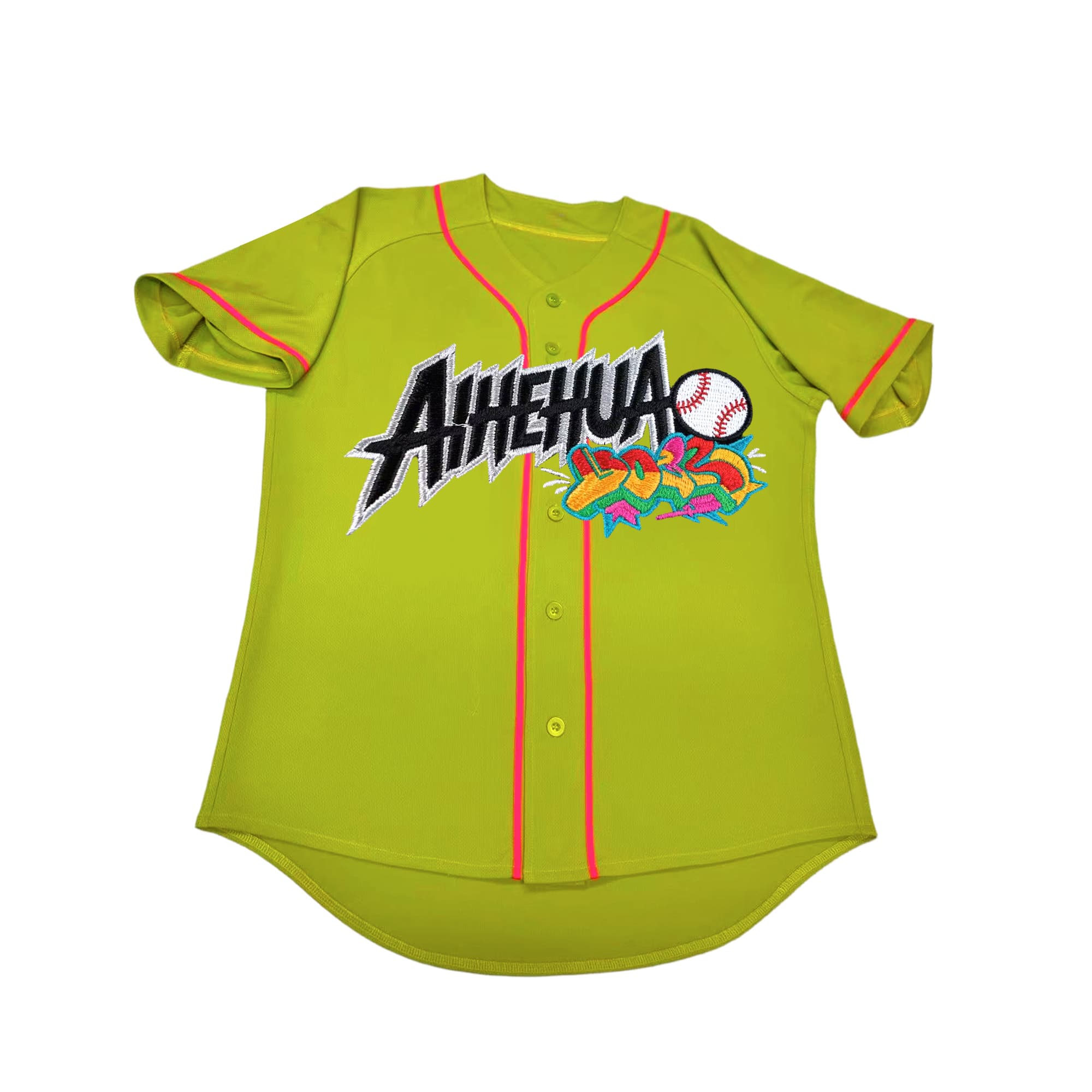
Jersey design affects more than appearance. Piping, raglan sleeves, and contrast panels change cutting complexity and how decoration sits on seams. The three reference styles below show how the same white button-front base can be configured differently.
| Style | Distinguishing features | Decoration considerations | Best fit for |
|---|---|---|---|
| Custom Black-Piped Baseball Jersey | White body, black piping, sleeve bands, small contrast panels | Piping and sleeve bands frame chest wordmarks; confirm number placement avoids trim | Teams wanting a classic, high-contrast look |
| Custom Blue-Trim Baseball Jersey | White body, blue raglan sleeves, green piping | Raglan seams can interrupt sleeve decoration; plan artwork accordingly | Clubs with multi-color identities |
| Custom Contrast-Panel Baseball Jersey | White body, black side panels, sleeve blocking | Side panels change silhouette; confirm panel color fastness with body | Programs wanting a modern, athletic look |
These are configurable references, not fixed catalog items. Colors, graphic placement, size run, material, and decoration process are set to your specification and confirmed through sampling. Use them to start a design conversation, not to assume a standard.
OEM baseball jerseys: what changes when you private-label
OEM production means the supplier manufactures to your specification, often under your brand. The core difference from stock ordering is that you own more of the specification—and therefore more of the validation burden.
Ask OEM suppliers for:
- Artwork-to-sample workflow. How do they translate your vector files into a pre-production sample? Who approves placement and color?
- Material and decoration confirmation. Which fabric and decoration processes will they use, and are these confirmed during sampling before bulk production?
- Size-run planning. Can they handle a mixed children-to-adult order without splitting production into incompatible batches?
- Labeling and packaging. If you need private-label neck labels or polybag branding, specify these early; they affect production steps.
Be wary of OEM quotes that list a price without a sample plan. A pre-production sample is your main risk-control tool. It is also the point where trim placement, number position, and material hand-feel become verifiable rather than assumed.
Coordinated uniform bags: the overlooked part of the order
Uniform bags are often added late, which can create mismatched branding or packing delays. Treat them as part of the uniform program from the start.
Decisions to make:
- Purpose. Is the bag for player transport, equipment storage, or both? This determines size and construction.
- Branding. Should the bag carry the team logo, player number, or sponsor marks? Confirm placement and decoration method.
- Coordination. If the bag should match jersey colors, provide the same color standards used for the jerseys.
- Packing logic. Decide whether bags are packed flat or filled, and whether they ship separately or with jerseys.
AIHEHUA produces custom baseball jerseys and coordinated uniform and equipment bags in Qingdao for B2B team orders. If you are sourcing both, ask whether jersey and bag production can be sequenced so color and branding stay consistent.
How to evaluate a team uniform supplier
Use a structured comparison rather than a single price check. The table below lists evaluation criteria and the evidence to request for each.
| Criterion | What to ask | Evidence to request |
|---|---|---|
| Specification control | How are body, sleeve, piping, and trim placement confirmed? | Approved pre-production sample with annotated artwork |
| Artwork handling | Who checks wordmark, crest, and numbering positions? | Placement diagram signed off before bulk |
| Size-run capability | Can children and adult sizes be planned in one order? | Size breakdown sheet and grade rules |
| Material and decoration | Which processes are used, and when are they confirmed? | Material swatches and decoration test sample |
| Uniform bag coordination | Can bags match jersey colors and branding? | Bag sample with color reference |
| Communication | Who is the single point of contact for changes? | Named contact and change-approval process |
Score each supplier against your brief. A supplier who is strong on design but vague on sample approval is a risk for team orders where 20 jerseys must match.
Sampling and pre-production approval: the step that protects the order
The pre-production sample is where you catch errors before they multiply. Review it under daylight, not office lighting, and check:
- Color match. Compare body, trim, and piping against your standards. Check that contrast panels are consistent across the sample.
- Placement. Measure wordmark height, crest position, and number placement against your approved diagram. Confirm sleeve and chest decoration sit correctly relative to seams.
- Construction. Check stitching at stress points, button alignment, and collar shape.
- Size. Measure the sample against your size chart, especially if the order includes youth and adult sizes.
- Decoration durability. If possible, ask how the decoration performs after washing; confirm the supplier's test method.
Approve the sample in writing. Keep a signed copy and a photo record. This becomes the reference for bulk production and for any later dispute.
Warning signs in a team uniform quote
Some signals suggest a supplier is not set up for coordinated team orders:
- Quotes that do not ask about size distribution or artwork placement.
- No mention of a pre-production sample or approval step.
- Vague answers about how trim and piping colors are matched.
- Uniform bags quoted separately with no color-matching discussion.
- Reluctance to confirm material and decoration processes before bulk production.
None of these is automatically disqualifying, but each should be resolved before you place a bulk order.
Next steps for your uniform program
Turn your brief into a request for quotation that includes roster sizes, artwork files, color standards, decoration preferences, and uniform bag requirements. Ask every supplier the same questions from the evaluation table, and require a pre-production sample before bulk production. Compare responses on specification control and sampling discipline, not price alone. That approach gives you a uniform set that matches across the roster and holds up through the season.